
Following Charlie Kirk’s murder, there’s been a lot of media discussion about ‘the right way’ of talking about politics, which I find hard to connect with Kirk’s career. It’s not just that I disagree with his view of the world, but that I disagree with his way of doing politics, prioritising the pursuit of victory over building a shared understanding.
First of all, it’s important to acknowledge that some of Kirk’s words have been taken out of context this past week. Notably, the Washington Post journalist Karen Attiah lost her job after misquoting Kirk as saying “Black women do not have the brain processing power to be taken seriously. You have to go steal a white person’s slot.” What Charlie Kirk actually said, in rhetorically talking to Michelle Obama and three other high-profile black women, was “You do not have the brain processing power to be taken seriously. You have to go steal a white person’s slot.” Stephen King has apologised for supposedly misrepresenting Kirk’s views on homosexuality, with Snopes arguing that Kirk wasn’t in favour of what he called “God’s perfect law when it comes to sexual matters” (Leviticus 18:22), which I think is a very generous interpretation of his words.
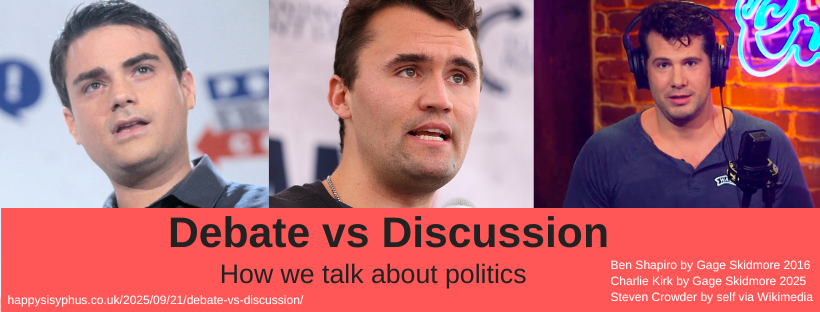
Kirk was part of the American “debate bro” culture. This is a mostly American, mostly right-wing trend which treats political discourse as a kind of verbal sport. From afar the names I would most closely associate with the movement are Ben Shapiro, Charlie Kirk and Stephen Crowder, all who became big names in their twenties, funded by strong corporate backers. All three spend a lot of time on college campuses, often sparring directly with members of the crowd. An example of how this works can be seen in Kirk’s final words. He was taking a question from the crowd, which involved a brief back and forth.
Questioner: “”Do you know how many transgender Americans have been mass shooters over the last 10 years?”
Kirk: “Too many.”
Questioner: ”Do you know how many mass shooters there have been in America over the last 10 years?”
Kirk: “Counting or not counting gang violence?”
The subtext to these two questions is clear – the Questioner is arguing that most mass shooters are not transgender, and that America has a major problem with mass shooters, but on both occasions, Kirk muddies the water rather than engaging directly.
A discussion should follow the process of thesis – antithesis – synthesis. A person enters the conversation with one view on the subject (thesis), listens to the opposing view (antithesis), and after a period of comparing the two, leave with a new, slightly broader perspective that combines the two (synthesis). In a debate, by contrast, the aim is to win. As a result, in a debate understanding any complexity or nuance the other side puts forward is a problem to be avoided, and misrepresentation is a winning strategy. You can see this in the way clips of the personalities’ perceived victories are marketed online, often following a childishly macho formula such as Ben Shapiro DESTROYS blue-haired liberal; Steven Crowder EDUCATES college student; Charlie Kirk MISREPRESENTS nervous teenager.




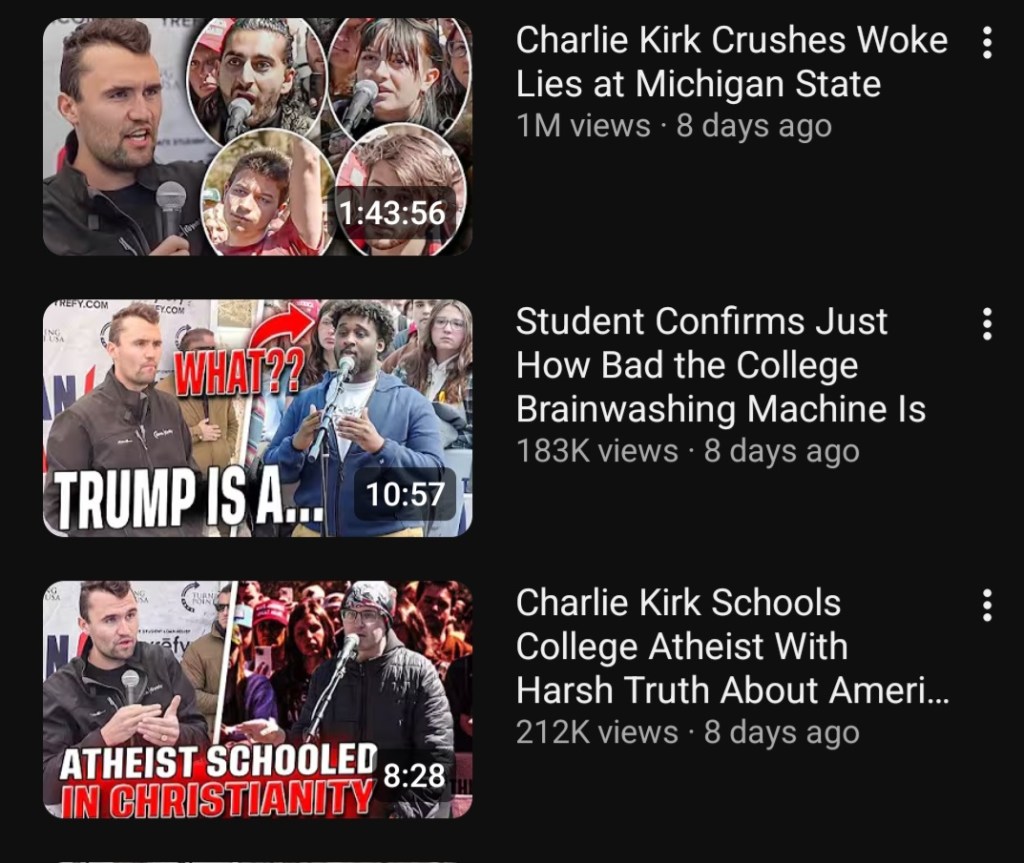

How is it that debate bros keep wracking up such overwhelming victories? Part of it is through the choice of opponents. To quote the comedian John Rogers, “A 31 year old professional content creator baiting 19 year old amateurs into the format of his choice isn’t debate, it’s crowd work”. Imagine if Mohammed Ali or Mike Tyson at their peak had media teams boasting about how their fighter defeated opponents who had only stepped into a ring two or three times in their life.

But the style is also a major factor. Steven Crowder is the host of the online political show Louder with Crowder. He has a wider fame because of an image of him that has become a popular meme – he sits behind a table with a political statement and the secondary message ‘Change my Mind’. In theory this could be a strong, provocative way to open a discussion… provided the host is actually willing to change his mind. During his debate on male privilege he didn’t show any such open-mindedness. When a male student talks about taking a feeling of safety for granted until a female friend explained lacking the same feeling, Crowder tried to make an irrelevant division between biological sex and socialised gender. Crowder argued that women in particular should carry guns, while still sticking to his opening belief that ‘male privilege is a myth’. He denied that rapists get away with rape (“It’s not true”) then mocked the student repeatedly for getting emotional and for cursing. Crowder judged a rape victim (“I am judging the decision”) for not being strong enough to publicly associate herself with the rape and press charges. My main takeaway from watching the video is that Crowder’s inexperienced opponent is bad at the sport, allowing Crowder to wind him up and lead the discussion into irrelevant or contradictory directions.
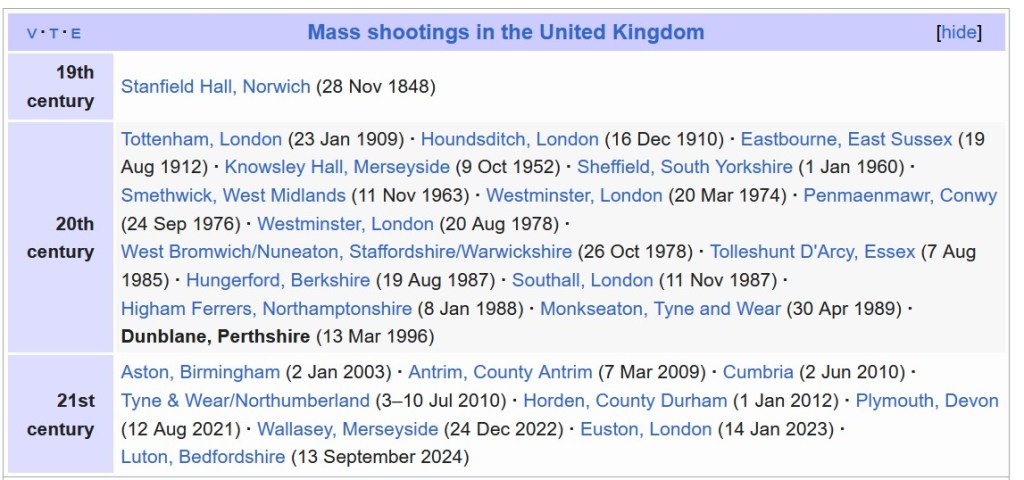
These misdirections are everywhere in debate bro culture. Going back to Charlie Kirk’s final words, he deploys two in quick succession. Firstly the questioner argues (imperfectly admittedly) that trans people are actually underrepresented in shooter demographics. Kirk refused to engage in the argument presented to him, saying the number of trans shooters is “Too many” – utterly meaningless given that one is too many. (The Gun Violence Archive calculate there have been 5 mass shootings by transgender or nonbinary people since January 2013, less than 0.1% of the total.) Then when asked about the overall number of mass shootings in America he tried to distract with a question about gang violence. Anyone with any kind of knowledge of American politics knows that the country has a huge problem with people – usually young men – going on killing sprees in public places. Kirk’s murder wasn’t even the only school shooting in America that hour. Kirk argued that deaths like his own were “worth it” and even deployed the silly cliché that disorganised militias would “protect us against government tyranny”, as if a military as big as the next 11 nations combined could be stopped by a handful of hobbyists. Misdirections like these work as a form of wilful self-delusion, for both the speaker and their fans – Kirk worked hard to prevent America from looking its problems square in the eye.

Obviously there is a time and a place for adversarial debate – it can be a good way to poke holes in one side’s thinking, and can even be entertaining. My favourite example of debate done well is when Nigel Farage was interviewed by the centrist radio host James O’Brien in 2014. I have contradictory feelings about O’Brien – he made his name in the mid-2010s for taking on inexperienced right-wing callers in the same way Charlie Kirk and other debate bros do, and I’ve seen debates where I felt O’Brien was being unfair to his opponent, even when I was closer to agreeing with O’Brien. But the O’Brien-Farage interview was, in my opinion, debate done intelligently and fairly, poking holes in the ideology of a person with significant political influence.
A month ago the progressive journalist Mehdi Hasan took part in a 20-on-1 debate, with the format being that 20 less experienced debaters would in turn go up against a more experienced debater 1-on-1. I’ve seen one of these 20 debates, in which a young blonde woman argues that Americans and immigrants are two distinct groups. Hasan grabs on to the fact that she considers her parents – who were born abroad but moved to the country as adults – to be Americans rather than immigrants. Watching that clip it was clear to me that Hasan behaved honourably and ‘won’ – her teammates were visibly annoyed at her and waving flags of surrender – but the whole experience still felt grubby. Yes, he managed to defeat and humiliate her, but so what? I feel like it would have been more productive to have a discussion about her beliefs, about the group psychology she has constructed in her mind, why she believes the two groups are distinct and opposed, and how her psychology might be reflected in the wider right-wing community.
As a debate bro, there are several occasions of Kirk grossly misrepresenting reality to fit the story he wanted to tell. Take the example of United Airlines. For whatever reason white men are massively over-represented among US commercial pilots, making up 30% of the population but 90% of pilots. North America also has a shortage of commercial airline pilots, and in April 2021 United Airline hoped that of its next batch of 5,000 pilots, 50% would be made up from the 70% of the population who are female or non-white. Kirk reacted to this by saying “If I see a black pilot, I’m gonna be like boy, I hope he’s qualified.”
Maybe Kirk was reacting to a headline he misunderstood, perhaps he didn’t know how over-represented white men are among pilots. As is often the case, the best defence of Charlie Kirk is that he is bad at understanding things. (His higher education was one semester at a community college named Harper College.) The alternative is that he deliberately spread misinformation, deliberately spread the idea that black men should be assumed incompetent, deliberately spread the idea that a corporation was pursuing a mad idea of equality rather than trying to tap into an under-utilised source of potential talent.
As with Kirk’s life work, his death has been used to spread misinformation. Fox News host Jesse Waters fanned his audience’s persecution complex saying “They are at war with us. What are we going to do about it. How much political violence are we going to tolerate?” Elon Musk has gone further, tweeting incoherently that “The Left is the party of murder”, and “If they won’t leave us in peace, then our choice is to fight or die.”
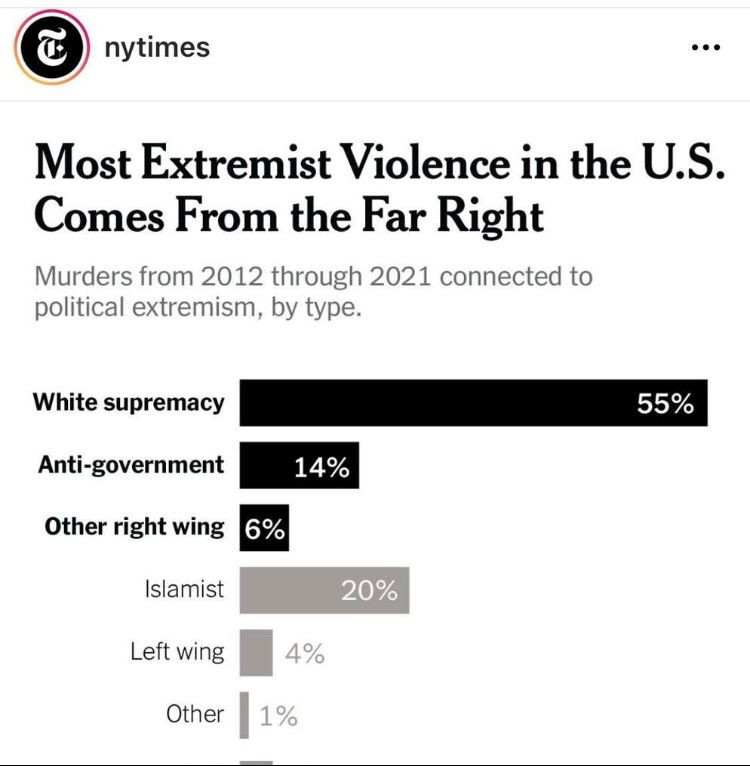
The Heritage Foundation – an influential far-right US pressure group – have started pushing the concept of Transgender Ideology-Inspired Violent Extremism or TIIVE, pushing the lie that the 0.1% of transgender mass shooters are somehow an existential threat. The problem with the idea of right-wingers being passive and innocent victims of left-wing terrorism is that it’s more untrue than true. A study by the Anti-Defamation League has concluded that 75% of the 450 political murders between 2012 and 2021 were committed by right-wingers.
Within the last six months Trump supporters have killed Minnesota House Speaker Melissa Hortman and her husband, and tried to kill Pennsylvania governor Josh Shapiro. The January 6th attempted coup claimed the lives of five people on the day, and four officers involved died by suicide in the months afterward. You would hope high-ranking Republicans would at least take these acts of violence seriously. But Donald Trump said he wouldn’t “waste time” by calling the Minnesota governor to offer his condolences after Hortman’s death. When Nancy Pelosi’s husband was attacked and hospitalised in 2023 Donald Trump joked about it, asking a rally crowd “how’s her husband doing, anybody know?” adding “she’s against building a wall at our border, even though she has a wall around her house — which obviously didn’t do a very good job.”
Of course I’m not trying to absolve the left and centre. Ryan Wesley Routh – the man who tried to assassinate Donald Trump at his golf course in September – seems to have voted for Bernie Sanders in 2020, while Luigi Mangione can probably be described as being motivated by anti-corporate politics. Political violence should be condemned on all sides, but instead Charlie Kirk’s death is being misrepresented by right-wingers to fan the flames. It’s worth watching Ben Shapiro’s misrepresentations being called out by Bill Maher. Shapiro, whether for economic or psychological reasons clearly wanted the clarity of righteous anger, and selectively ignored facts before Maher gracefully deflated him.
I’ve been thinking this past week about whether it’s fair to say Charlie Kirk was a bad person. In addition to what I’ve shared above, Kirk has spread other opinions which are both stupid and bigoted. He promoted the Great Replacement Theory, saying “you are being replaced, by design”, and “Muslims plan to conquer Europe by demographic replacement.” He claimed that “Islam is not compatible with western civilisation”, “Jewish donors have been the number one funding mechanism of radical open-border, neoliberal, quasi-Marxist policies”, and “Prowling Blacks go around for fun to target white people”. His Turning Point organisation has been instrumental in the creation of ProfessorWatch which, whether through intent or neglect, has been used to harass academics considered to be left-wing, with at least two occasions of campuses needing to be closed for the day because of harassment campaigns linked to the website.
The part that makes the question complicated is that I know people who I would consider to be good, kind people, who trust Tommy Robinson and GB News as legitimate sources of political news. The sources of their political worldviews inevitably affect what they believe to be true – Garbage In, Garbage Out. Kirk has been praised in many quarters for talking to people he disagrees with, but what is there to praise in distorting and refusing to listen? What is praiseworthy in softly spreading conspiracy theories, gently saying that black women of higher academic achievement lack brainpower, or politely directing a hate mob?
I can’t say for certain to what extent Charlie Kirk was propagandised, and to what extent he was a hateful person. But words are not morally neutral, they contain ideas, which shape our inner lives and affect how we behave to each other. In a discussion we try to understand how the other person thinks and lives their life, how they are similar and different from ourselves, and what makes them unique, special, and admirable. Discussion helps us to listen to other people and find ways we can cooperate or at least co-exist. Charlie Kirk was a small but significant part of a movement dedicated to making that process harder.
 Happy Sisyphus
Leave a comment