

Elizabeth Warren has spoken about how tales of the family’s Native American heritage played a part in her childhood, saying that “Being Native American has been part of my story, I guess, since the day I was born.”
The evidence suggests that Warren always saw her Native American history as part of her identity, not the entirety of it. In her application form when she applied to study law at Rutgers, Warren declined to apply for the ‘Program for Minority Group Students’. (She had to actively answer ‘no’ on the paperwork.) Documents from her time teaching at the University of Texas show that she self-identified as ‘white’ for at least some of her time there, between 1981 and 1991.
During her time in Texas Warren co-authored several books on the impact recent changes in bankruptcy laws was having on middle-class Americans. One of these books, As We Forgive Our Debtors, co-authored with Jay Westbrook and Teresa Sullivan, won the American Bar Association’s Silver Gavel Award in 1989. Between 1982 and 1985 Warren, Westbrook and Sullivan launched a study they titled the Consumer Bankruptcy Project, which the Texas Tribune refers to as “the largest empirical study of bankruptcy then undertaken.”
The Boston Globe claims that Warren became in high demand as a speaker around this time, because of her talent as an ‘unusually charismatic speaker in an otherwise dry field’. David A. Skeel, one of Warren’s contemporaries in bankruptcy law academia recalls that “she has a real gift for sound bites and homey, colorful metaphors.”
The Association of American Law Schools issues a directory of law professors. Between 1986 and 1995 Warren was listed among the ‘minority’ law professors. In 2012 she claimed that “I listed myself directory in the hopes that might mean that I would be invited to a luncheon, a group something with people who are like I am. Nothing like that every happened. That was absolutely not the use for it and so I stopped checking it off.”
In 1992-3 Harvard Law began reporting, as part of federal statistics, that they employed one Native American female professor. This was the first year Warren worked at Harvard Law, as a visiting professor.
Charles Fried, who served as Solicitor General under Ronald Reagan between 1985 and 1989, sat on the appointing committee that recommended Warren be hired to a full-time position by Harvard in 1995.
Fried says that Warren’s ethnicity “simply played no role in the appointments process. It was not mentioned and I didn’t mention it to the faculty.” Fried says that he learned of Warren’s Native American heritage later, when he commented on a photo of her mother.
Hank Gutman, Stephen B. Burbank and Robert H. Mundheim – three men who recommended Warren for various roles during the 1980s and 1990s – have all professed to not having known about her claims to Native American ancestry when making their recommendations.

In 1996 when the Harvard Crimson wrote an article criticising the low number of minority and female professors in the Law School, Warren was used as part of a defence. The published article states that “Although the conventional wisdom among students and faculty is that the Law School faculty includes no minority women, [Law School Spokesman Mike] Chmura said professor of law Elizabeth Warren is Native American.”
A 2005 report by the University of Pennsylvania concluded that only 8 of 112 teaching awards in the previous 13 years were given to minority teachers, with Warren among them. (The awards themselves were open to all teachers, but this indicates that Pennsylvania, like Harvard, considered Warren to be part of a minority group.)
Warren won student-nominated teaching awards at four of the five schools she taught at – it seems that her students felt Warren was good at her job, which goes against the theory that she wouldn’t have gotten her job had it not been for her claims to minority status.
I’ve been following the ‘Pocahontas’ controversy since 2016, but have only in the past few days looked more deeply at the evidence. As the tweet above shows, a few days before publishing this blogpost I believed that there was probably some truth to the idea that Warren exaggerated her ancestry to get ahead. I no longer believe this.
There’s no evidence of Warren promoting her Native American heritage prior to 1986, the year after the highly ambitious Consumer Bankruptcy Project concluded. At least four people in relevant positions of power have been quoted as saying that Warren didn’t put her claim to be of Native American ancestry in a place that they’d see it.
Those who worked alongside her in her younger years describe Warren as ambitious, but I can’t see any reason why Warren would base her self-promotion on an ethnic exaggeration rather than the fact that she co-created the largest ever study of its type in America. If this was Warren’s way of getting ahead, it was a bad strategy, badly executed, that she stuck with for almost a decade, for six years after winning a prestigious award. Warren has a decent sense of strategy – she famously stayed neutral during the Clinton-Sanders debates in 2016, and often reaches out to find common ground with Republicans. Ethics aside, I can’t believe that Warren was ever strategically inept enough to make the decisions that she is accused of making.
That’s not to say that Warren is totally innocent. Chuck Hoskin Jr., the Secretary of State for the Cherokee Nation, has criticised Warren’s use of a DNA test to assert her Native American heritage. Having racial insults thrown around in the media and online can’t be pleasant for Native Americans, and I think Warren should be more mindful of her part in this. Warren’s honest mistake back in 1986 is responsible for beginning this feud, which first her opponent in 2012 Scott Brown, and then Donald Trump from 2016 onwards, have used to attack her. I’d like to see Warren hold her hands up and apologise for unleashing this mess, however accidentally. We can’t expect an opportunist like Trump to behave with dignity. But I get the impression that Warren is a decent enough person to regret the sight of Trump going off track at an event which was intended to honour Navajo veteran ‘codebreakers’. (In Brown’s defence, he pursued the issue at a time when there had been less journalistic digging into Warren’s past in the public domain, so it was probably a fair line of attack then.)
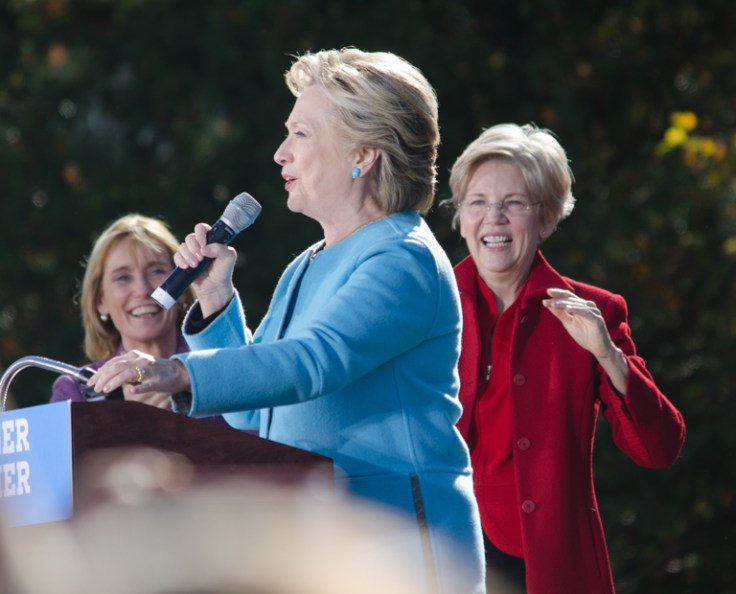
A range of media outlets, from CNN to right-wing alternative media like True Pundit and The Blaze have referred to Warren as having a ‘Pocahontas Problem’. She is one of the frontrunners to be the Democratic nominee for President in 2020, but the scandal over her supposedly exaggerating her heritage is the biggest obstacle for her to overcome.
There isn’t much evidence that Warren herself pushed her heritage when applying for jobs. The evidence in the public domain suggests that, during her academic career, she only made the claim in casual conversations and in an academic directory which doesn’t seem to be widely read. It seems likely that administrative staff at Harvard and Pennsylvania searched through the directory and gathered information on their staff, possibly without contacting relevant individuals to confirm the accuracy. I think Warren could have been more tactful in how she’s addressed the issue, but as an admirer, I’m pleasantly surprised that the case against her is a lot weaker than I’d feared.
***
Why would the co-creator of the Consumer Bankruptcy Project feel the need to exaggerate her ethnicity to advance her career?
Which would look more impressive on a CV, the 1989 Silver Gavel Award, or Native American heritage?
If Warren used her Native American heritage for career advancement, why did Fried, Gutman, Burbank and Mundheim not know about it when recommending her?
Do Trump and his allies care about Warren potentially offending Native Americans, or are they using them tactically to shut down an opponent without engaging with her ideas?
 Happy Sisyphus
Leave a comment